
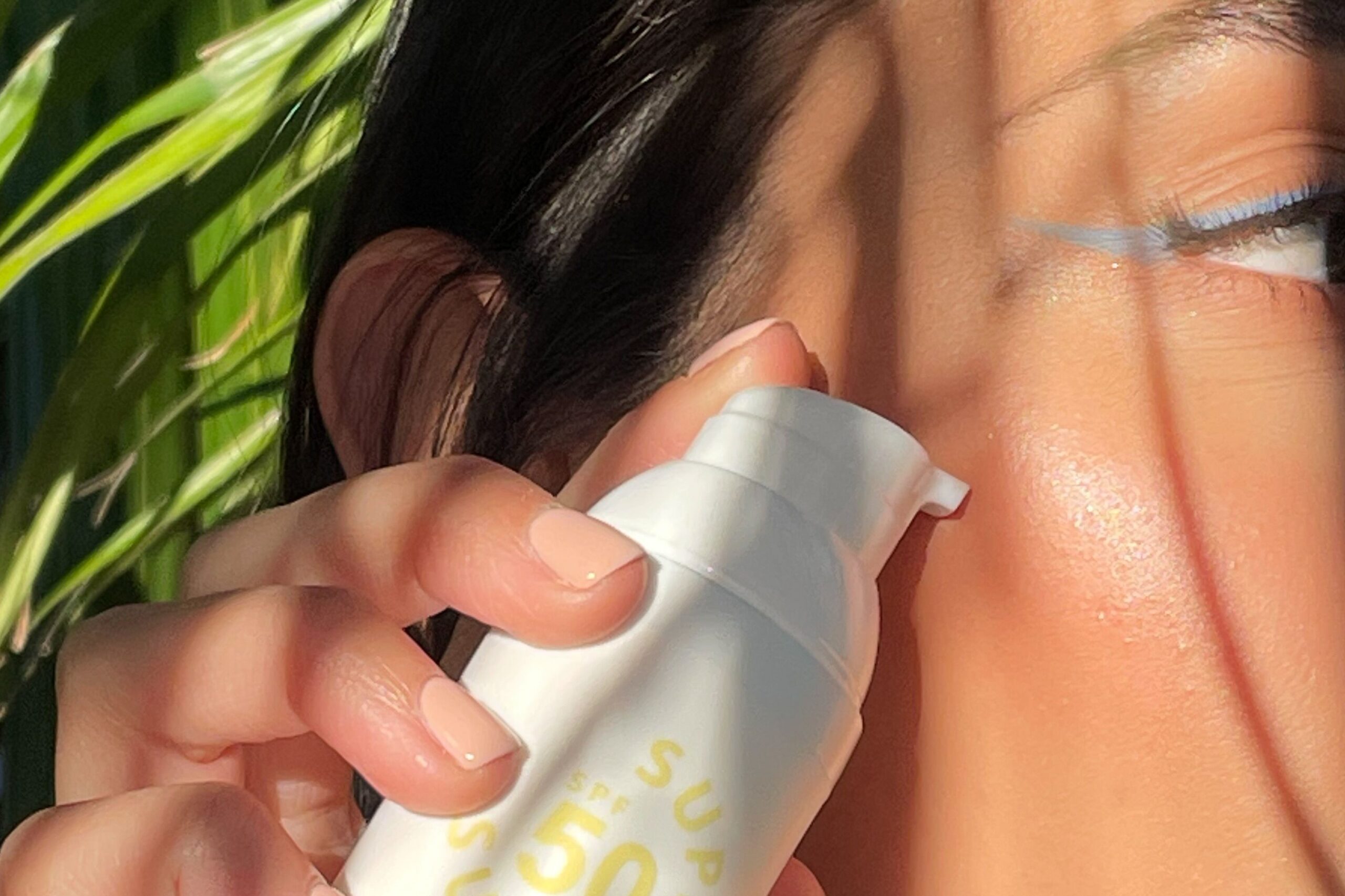
UV photography has existed for decades, and the equipment has become smaller and easier to use. What once required a specialist camera setup can now be built into compact displays and smartphone accessories. Some stores and clinics use these devices to show customers how sunscreen appears under ultraviolet light.
The result can be quite informative. Sunscreen-covered areas often appear dark, while missed patches stay lighter. A UV camera may help you find gaps in your application. It cannot confirm your SPF, judge which sunscreen protects better, or measure how much protection remains later. Still, for most people, that limited purpose does not justify buying a personal device.
What Can the Camera Show?
A sunscreen UV camera captures reflected ultraviolet light instead of producing a normal photograph. Some sunscreen filters absorb the wavelengths detected by the camera, so covered skin may look darker than bare skin.
Darkness does not equal protection, though. A dark area means the camera can detect the product under its particular imaging conditions. It does not prove that you applied enough to receive the SPF printed on the product. SPF is determined through controlled testing, not by visually examining how dark sunscreen looks under UV cameras. A consumer camera cannot measure SPF, UVA protection, or water resistance.
This technology also differs from a UV-index monitor. A UV monitor measures the amount of ultraviolet radiation in your surroundings. A sunscreen UV camera shows how UV light reflects from the surface of your skin.
Finding Missed Areas
The strongest argument for UV imaging is simple: people do not always cover their faces as completely as they think.
In a study of 57 sunscreen users, UV photographs revealed that the eye area was missed more often than the rest of the face. The typical participant left 14% of the eyelid region uncovered, compared with 7% elsewhere. Most participants also missed the inner eye area near the bridge of the nose. This pattern makes sense. Many people apply less near their eyes because they are worried about stinging. The hairline, ears, sides of the nose, and edges of the face are also easy to overlook during a hurried morning routine.
It could make a UV camera useful as a one-time teaching tool. Once you learn that you usually neglect your hairline or the area beside your nose, you can correct the habit without checking a screen every time.
Not Every Sunscreen Appears Clearly
The biggest weakness of UV cameras is that different sunscreens do not produce consistent images.
A 2021 study comparing three UV-camera systems found that all three could display the chemical-filter sunscreens included in the first part of the research. Thinner applications appeared less complete than thicker ones.
Tinted products were even less predictable. Three of the five tinted SPF products examined in the same study were barely visible or completely undetectable in the photographs. All five still contained sunscreen filters. A faint UV image therefore does not mean your tinted sunscreen has stopped working. Pigments, zinc oxide, titanium dioxide, other filters, and the formula as a whole can all change its appearance.
This is also why a UV camera cannot settle the debate between physical and chemical sunscreen filters. It only shows how a formula reacts under that camera, not which type offers better protection.
A Darker Image Isn’t Better
Once you see two sunscreens on a UV screen, it is tempting to call the darker one the winner. The conclusion is unreliable. One product may look darker because its filters absorb the wavelengths captured by that camera more strongly. Another may look lighter because its tint, mineral ingredients, or base formula changes the image. Lighting and camera settings can create further differences.
Two effective SPF 50 products could therefore produce very different-looking photographs. One appearing darker does not make it the stronger sunscreen. The image is also unreliable as a reapplication timer. A sunscreen film can remain visible after sweat, water, rubbing, or facial movement has disturbed its original coverage. Your face may still look dark on the screen even though the protection is no longer as even as it was.
This limitation became clear in a study that compared UV photographs with specialized sunscreen measurements. The measuring equipment detected changes in protection that the photographs did not show clearly. In simpler terms, the sunscreen’s performance changed while the UV picture failed to reflect that change.
When outdoors, the AAD recommends reapplying sunscreen approximately every two hours, as well as after swimming or sweating. Follow those instructions instead of waiting for your UV image to fade.
Is a UV Camera Worth Buying?
For most people, no. Once you identify the areas you tend to miss, the camera has little left to teach you. It cannot verify SPF, compare products fairly, or track your remaining protection throughout the day.
Buying one may make sense if:
- You regularly struggle with uneven sunscreen application.
- Visual feedback would help you change your habits.
- You understand that the image is not a protection measurement.
- The price feels reasonable for occasional use.
It makes much less sense if you want to test sunscreen strength or decide which product performs best. Trying a UV camera at a clinic, store, pharmacy, or relevant skincare event is a better option. One session may be enough to reveal your application habits without adding another rarely used device to your routine.
Be cautious with anything marketed as a home sunscreen “analyzer.” If the brand claims that their product can confirm SPF or measure the protection left on your skin, it is promising more than the camera can really deliver.
What Matters More
The money is usually better spent on a sunscreen you enjoy using in a sufficient amount. A comfortable formula that you apply consistently will do more than an impressive device.
Take a little extra time around the hairline, temples, ears, neck, nose, and eyes. If sunscreen stings near your eyes, look for a better-tolerated formula rather than avoiding the area completely. Sunglasses and a wide-brimmed hat can add protection where application is difficult.
These habits are not technologically exciting, but they address the real problem. Complete application and timely reapplication matter more than what your face looks like on a UV screen.
🧪 Lab Verdict
A UV camera is a coverage viewer, not a sunscreen tester.
It can reveal an obvious missed patch when your chosen formula appears clearly. It cannot certify your SPF, rank different sunscreens, or tell you how much protection remains.
For most people, it is not worth buying. Trying one once could improve your technique, but owning one is unlikely to add much to a well-established routine. Your attention and your money will go further with a sunscreen you will apply properly and wear consistently.
Leave a Reply