
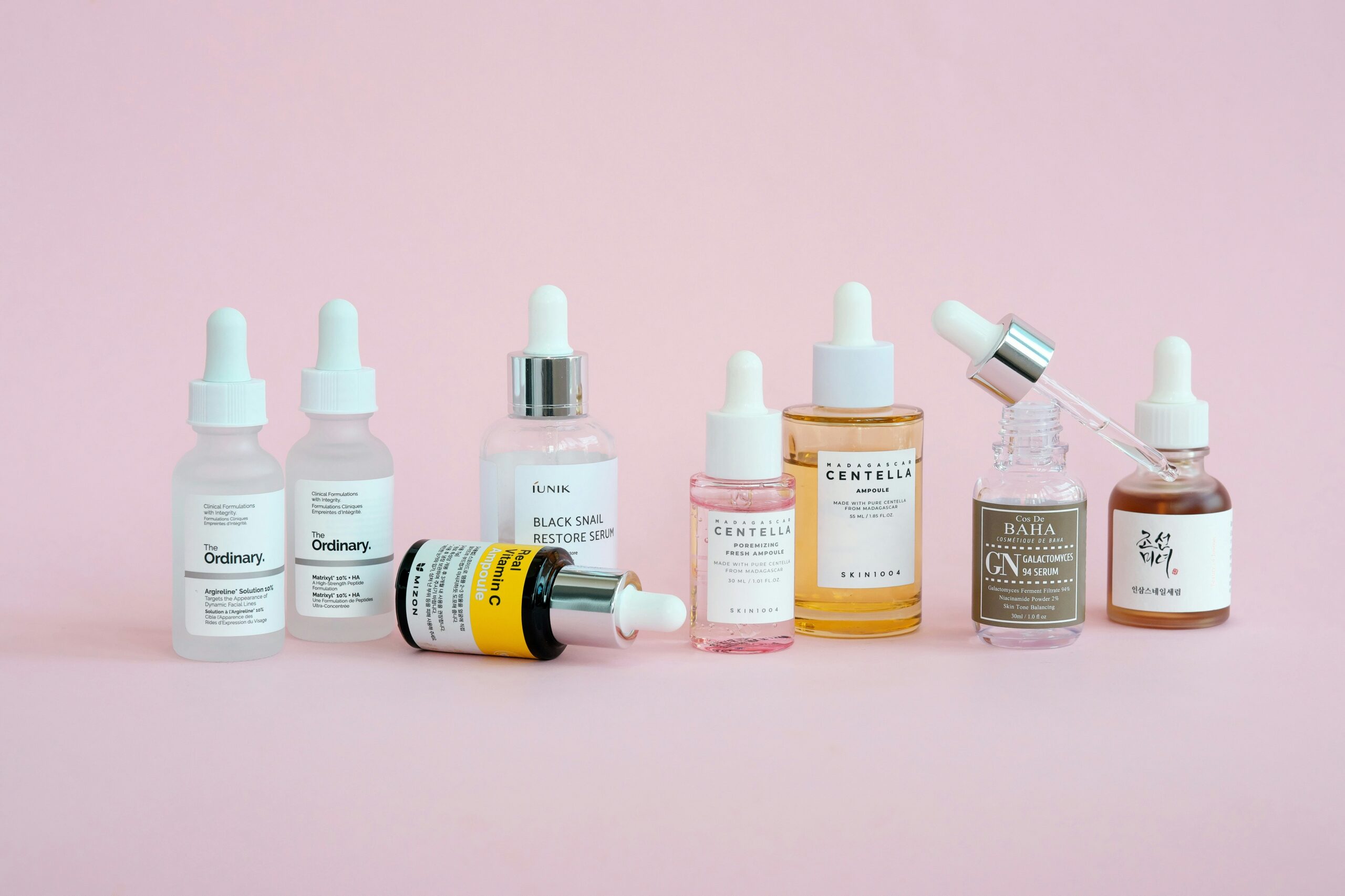
That wall of unpronounceable text on the back of your moisturizer? It’s not trying to confuse you — it’s telling you everything. Most people flip a product over, see Butyrospermum Parkii Butter and Dimethicone, and flip it right back. But those names follow a precise international system. Once you understand the rules, an ingredient list stops being a mystery and starts being the most useful tool in your skincare routine. Here’s how cosmetic chemists actually read one.
What Is INCI?
INCI stands for International Nomenclature of Cosmetic Ingredients — a globally standardized system for naming every ingredient used in cosmetics and personal care products. It is maintained by the Personal Care Products Council (PCPC) and recognized by the FDA as the required naming standard for cosmetic labels in the US. In the EU, INCI labeling has been legally mandatory since 1997 under Cosmetics Regulation (EC).
Before INCI, the same ingredient could appear under dozens of different names depending on the brand, country, or trade tradition. INCI fixed this by assigning one universal name to each ingredient, which is why water is always Aqua, vitamin E is always Tocopherol, and shea butter is always Butyrospermum Parkii Butter on every product, everywhere in the world.
There are currently over 16,000 ingredients in the INCI system.
The Golden Rule: Order and the 1% Line
The most important rule: ingredients are listed in descending order of concentration by weight, but only for those present above 1%. The ingredient with the highest percentage appears first; the first five typically make up 70–80% of the entire formula. This is the product’s base — its texture, delivery system, and fundamental character.
Once you reach ingredients at or below 1%, the law allows brands to list them in any order they choose. That flexibility is where most label manipulation occurs.
Finding the 1% Line
Brands don’t disclose exact percentages, but certain ingredients reliably mark the boundary:
- Phenoxyethanol — capped at 1% in both EU and US regulations; everything listed after it is below 1%
- Plant extracts — almost universally sub-1% due to cost and irritation risk at higher doses
- Parabens, sodium benzoate, potassium sorbate — trace-concentration preservatives
- Essential oils and fragrance components — rarely above 1% in facial products
So when a brand proudly markets a product with “rosehip oil” and that extract appears after phenoxyethanol? Its concentration is below 1% — functionally decorative rather than active.
Ingredient Categories Decoded
Recognizing these functional categories is how chemists read a formula’s intent at a glance.
| Category | What it does | Common INCI examples |
|---|---|---|
| Humectants | Draw water into the skin | Glycerin, Sodium Hyaluronate, Urea |
| Emollients | Soften and smooth skin surface | Squalane, Butyrospermum Parkii Butter, Dimethicone |
| Occlusives | Seal in moisture, reduce water loss | Petrolatum, Cera Alba (beeswax), Lanolin |
| Emulsifiers | Hold oil and water together | Cetearyl Alcohol, Polysorbate 20 |
| Preservatives | Prevent bacterial and mold growth | Phenoxyethanol, Methylparaben, Sodium Benzoate |
| Actives | Target specific skin concerns | Niacinamide, Retinol, Ascorbic Acid |
One note on preservatives: they are not optional in any water-containing formula. Without them, a cream would be colonized by bacteria within days. Parabens, in particular, are among the most studied cosmetic preservatives in history. Their safety at use concentrations is well-established in the scientific literature.
Latin Names: A Quick Translation Table
Botanical ingredients use Latin binomial nomenclature for precision — many plants share the same common name but are entirely different species with different skin effects.
| INCI name | Common name |
|---|---|
| Aqua | Water |
| Butyrospermum Parkii Butter | Shea butter |
| Simmondsia Chinensis Seed Oil | Jojoba oil |
| Aloe Barbadensis Leaf Juice | Aloe vera |
| Rosa Canina Fruit Oil | Rosehip oil |
| Camellia Sinensis Leaf Extract | Green tea extract |
| Tocopherol | Vitamin E |
| Ascorbic Acid | Vitamin C (L-ascorbic acid form) |
| Retinol | Vitamin A alcohol |
| Centella Asiatica Extract | Cica / gotu kola |
Hidden Fragrance Allergens
When you see “Parfum” or “Fragrance” on a label, that single term can represent a blend of dozens — sometimes hundreds — of individual chemical compounds. Regulations in both the EU and US permit this broad grouping under a trade secret exemption.
The EU mandates disclosure of 26 specific fragrance allergens only when present above threshold concentrations (0.001% in leave-on products; 0.01% in rinse-off products). The US FDA requires no allergen-specific disclosure at all.
Key allergen terms to scan for beyond “Parfum”:
Limonene, Linalool, Geraniol, Citral, Eugenol, Coumarin, Cinnamal
Critically, a product can be labeled “fragrance-free” yet still contain Linalool or Linalyl Acetate if those compounds entered the formula as part of a plant extract rather than a synthetic fragrance blend. For sensitive skin or a history of contact dermatitis, “fragrance-free” is not enough. Check for individual allergen names.
How Brands Manipulate the List
The star ingredient trick. Because sub-1% ingredients can be listed in any order, brands position their hero ingredient near the top of that lower section. Rosehip extract listed just above phenoxyethanol looks more prominent than rosehip extract listed below it, even though both may be at near-identical trace concentrations.
The “natural” label problem. The terms “natural,” “clean,” “pure,” and “botanical” have no regulated definition in cosmetics in most markets. A product can contain 95% synthetic ingredients and still legally carry these labels. The only way to evaluate the claim is to read the actual INCI list.
The concentration catch. Position matters for actives. Niacinamide needs roughly 2–5% to deliver clinical brightening and pore-refining benefits. Vitamin C (L-ascorbic acid) needs 10–20% for meaningful antioxidant protection. If either appears in the bottom third of a list — especially below phenoxyethanol — the formula likely doesn’t contain a functional dose.
Three Free Tools to Decode Any Label
1. INCIDecoder (incidecoder.com) — paste any ingredient list and get research-referenced explanations of each ingredient, including function, evidence quality, and potential irritancy. Ratings are based on peer-reviewed literature, not fear scores.
2. CosIng — EU Cosmetic Ingredient Database — the official European Commission database for checking an ingredient’s regulatory status, approved functions, and safety opinions.
3. PCPC INCI Dictionary (personalcarecouncil.org) — the source database for INCI names, useful for verifying official designations and naming conventions.
One tool to approach with caution: EWG’s Skin Deep database assigns hazard ratings that frequently misalign with scientific consensus. Its methodology conflates theoretical hazard with real-world risk at cosmetic concentrations. Cross-reference its claims before drawing conclusions.
🧪 Lab Verdict
The INCI list is a formula’s blueprint, not a warning label. The rules that matter most: ingredients above 1% are listed by concentration; everything at or below 1% can appear in any order; the first five ingredients define what the product fundamentally is; and actives buried in the lower third are almost certainly at sub-clinical doses. Bookmark INCIDecoder, learn to recognize phenoxyethanol as your 1% marker, and treat “natural” and “clean” as marketing language until the ingredient list says otherwise.
References
- Personal Care Products Council. “INCI — International Nomenclature of Cosmetic Ingredients.” INCIPedia. https://incipedia.personalcarecouncil.org/regulatory-information/
- U.S. Food and Drug Administration. “Summary of Cosmetics Labeling Requirements.” https://www.fda.gov/cosmetics/cosmetics-labeling-regulations/summary-cosmetics-labeling-requirements
- Cornell Law School. “21 CFR § 701.3 — Designation of Ingredients.” https://www.law.cornell.edu/cfr/text/21/701.3
- European Commission. “CosIng — Cosmetic Ingredient Database.” https://single-market-economy.ec.europa.eu/sectors/cosmetics/cosmetic-ingredient-database_en
- INCIDecoder. “Decode Your Skincare Ingredients.” https://incidecoder.com
- Burnett CL, et al. “Safety Assessment of Phenoxyethanol as a Cosmetic Ingredient.” International Journal of Toxicology. 2018;37(2_suppl):75S–90S. doi:10.1177/1091581818774969
- Fiume MM, et al. “Safety Assessment of Xanthan Gum as Used in Cosmetics.” International Journal of Toxicology. 2016;35(3_suppl):36S–67S. doi:10.1177/1091581816648609
- Cosmébio. “INCI List: How to Read the Ingredient List of Your Cosmetics.” March 2020. https://www.cosmebio.org/en/reports/INCI-list-how-to-read-ingredient-list-cosmetics/
- Gottschalck TE, Bailey JE (eds.). International Cosmetic Ingredient Dictionary and Handbook. 16th ed. Personal Care Products Council; 2016.
- Basketter DA, et al. “Fragrance ingredients: Overview of safety assessment.” Food and Chemical Toxicology. 2016;88:56–66. doi:10.1016/j.fct.2015.12.020
- Johansen JD, et al. “European Society of Contact Dermatitis guideline for diagnostic patch testing.” Contact Dermatitis. 2015;73(4):195–221. doi:10.1111/cod.12432
- Zirwas MJ, Stechschulte SA. “Moisturizer Allergy: Diagnosis and Management.” Journal of Clinical and Aesthetic Dermatology. 2008;1(4):38–44. PMC2923961
- Klaschka U. “Natural personal care products — analysis of ingredient lists and legal requirements.” Environmental Sciences Europe. 2016;28(1):8. doi:10.1186/s12302-016-0076-7
- Steinberg DC. “Preservatives for Cosmetics.” 3rd ed. Allured Business Media; 2012.
Leave a Reply