
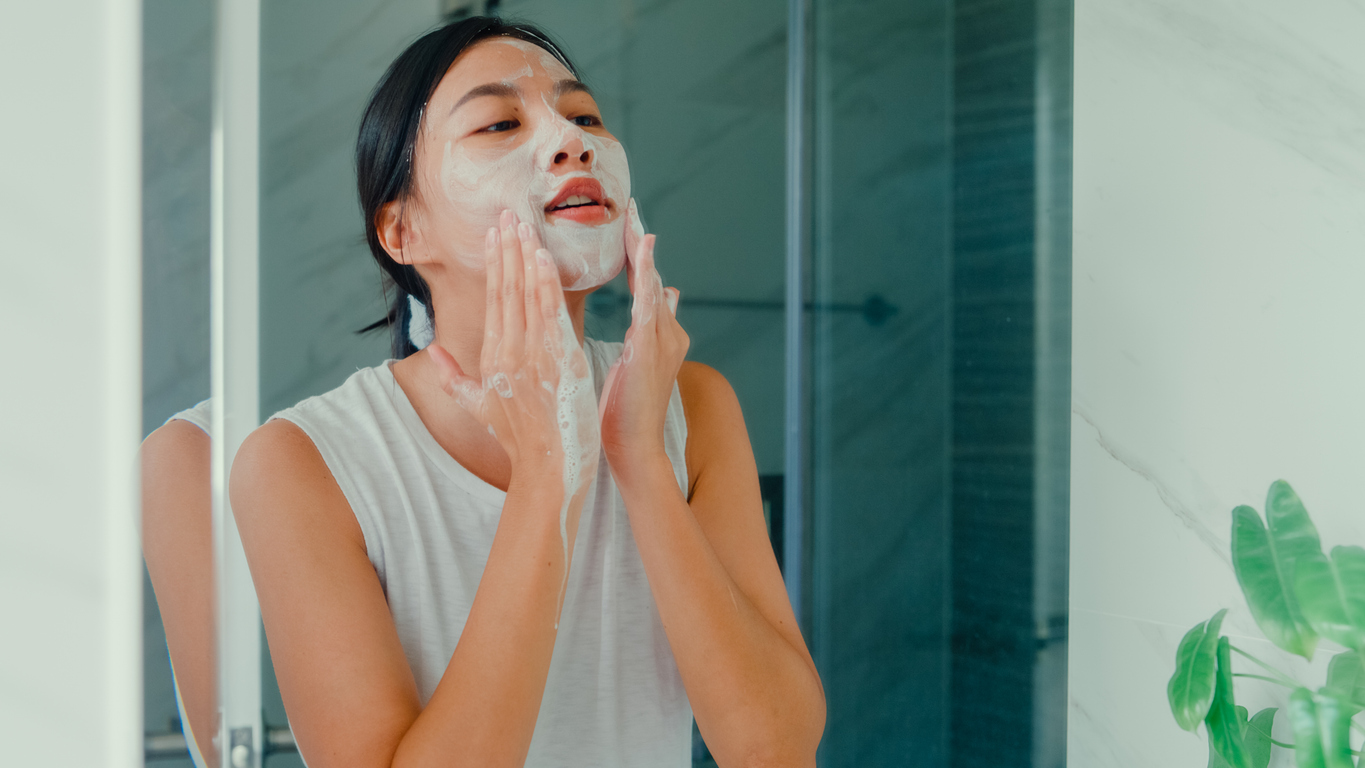
That tight, squeaky-clean feeling right after washing your face? Most people read it as a good sign — proof the cleanser is working. In reality, it often means the opposite. That sensation is your skin signaling that something has pulled it away from its natural, slightly acidic state, and your barrier — the protective layer you spend good money on serums to support — has just taken a hit. This article explains why skin pH matters more than most routines account for, and what to do about it.
Your Skin Has a Natural pH — and It’s Acidic on Purpose
Healthy skin sits in a mildly acidic range — roughly pH 4.5 to 5.5 on the outermost surface. It’s a carefully maintained environment that your body actively produces through multiple biological processes, including the breakdown of skin proteins and secretions from sweat glands.
This acidic surface is called the acid mantle — a term coined in 1928 by German researchers who first recognized that the skin surface had an inherently acidic character. What they observed as an antimicrobial property has since been shown to be far more: a central regulator of barrier function, skin cell turnover, and the microbial community that lives on your skin.
The interior of your skin, by contrast, is near-neutral (around pH 7.4 — similar to the rest of the body). That difference between the acidic surface and the neutral interior creates a pH gradient that helps drive many of the barrier’s core jobs.
What the Acid Mantle Actually Does
The acid mantle handles several jobs that directly affect your skin day to day.
It produces barrier lipids. The moisturizing “mortar” between skin cells — made primarily of ceramides — depends on two enzymes that only work properly in an acidic environment. When pH rises, those enzymes slow down, fewer ceramides are produced, and the barrier becomes leaky. That means more water evaporating out, and more irritants getting in.
It controls how skin sheds. Dead skin cells are naturally shed in an orderly, invisible process regulated by enzymes that are kept in check at low pH. When pH rises, those enzymes become overactive — skin sheds faster than it should, the surface loses structural coherence, and you get flaking, roughness, and unexpected sensitivity.
It keeps the microbiome in balance. Acidic conditions favor the beneficial bacteria that naturally live on healthy skin. Research has shown that even a small drop in pH significantly increases the death rate of Staphylococcus aureus, a pathogen associated with acne and eczema flares — one study found a 68% increase in bacterial kill for a single unit decrease in pH. That’s a meaningful antibacterial effect produced by your own skin chemistry, for free, when conditions are right.
It manages inflammation. At healthy pH, inflammatory signals in the outer skin layers stay quiet. When pH rises, those signals activate, and low-grade inflammation can become a persistent background condition rather than a short-term response to injury.
What Happens When It Gets Disrupted
When skin pH drifts from its acidic ideal toward neutral or alkaline, the effects compound quickly.
- The ceramide-producing enzymes slow down → barrier weakens
- Skin cells shed unevenly → surface feels rough and flaky
- Harmful bacteria find a more welcoming environment → more breakouts or irritation
- Inflammatory signals turn on → redness and sensitivity increase
- Water loss goes up → skin dehydrates from the inside
The key point that research now recognizes: elevated skin pH is not just a symptom of skin problems — it can be a driver of them. Repeated disruption without recovery time compounds into chronic barrier dysfunction.
Why Your Cleanser Is the Likely Culprit
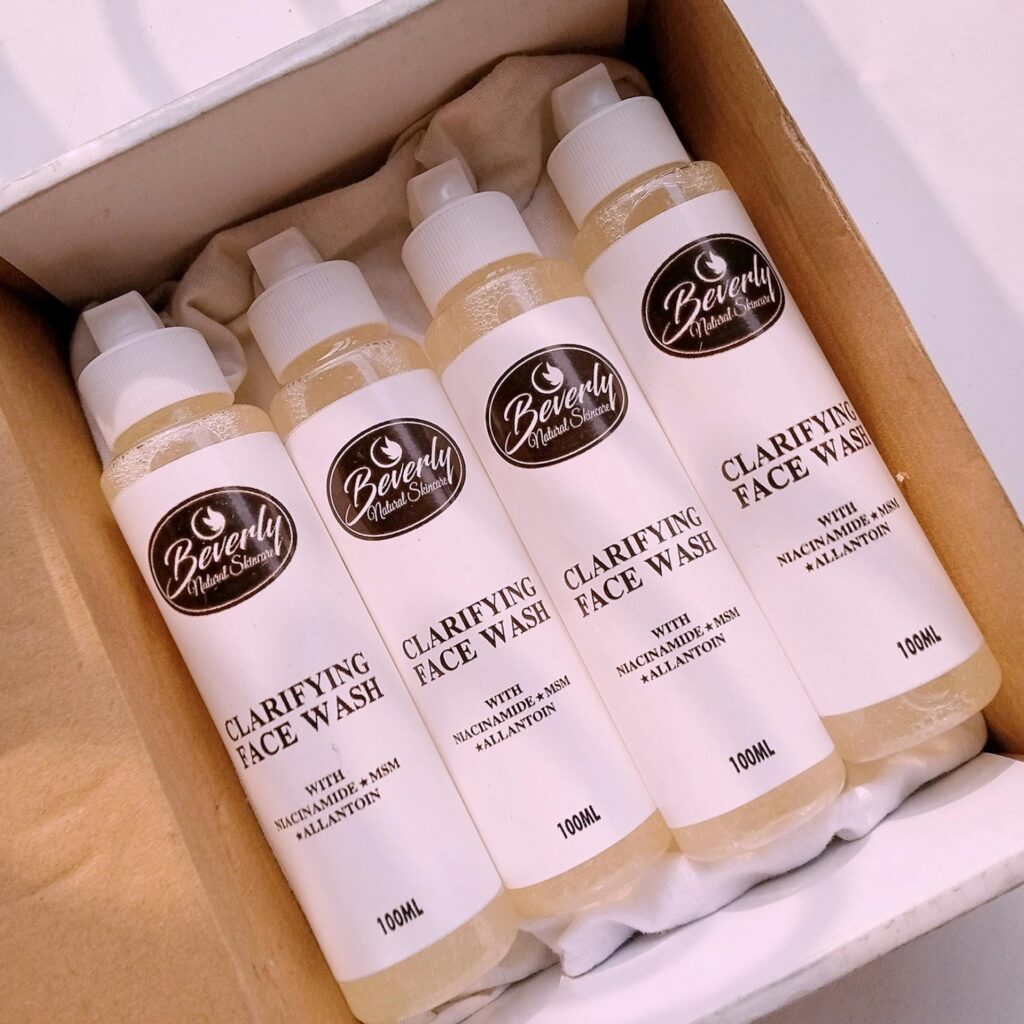
Of all the products in a routine, cleansers are in the best position to cause this kind of disruption. They are used daily, often twice, on already-damp skin, which is more vulnerable to pH shifts. Even brief contact with an alkaline product can raise the skin’s surface pH significantly, and studies show that alkaline cleansers can push skin pH up by as much as 3 units, with that elevation persisting for up to 90 minutes afterward.
With twice-daily use, the skin doesn’t have time to fully recover between washes. The buffering mechanisms that handle occasional pH spikes are repeatedly stressed, and over time, the barrier reflects that.
Critically, research confirms that high pH itself — not just harsh surfactants — is directly damaging. Even alkaline solutions without any detergent have been shown to increase stratum corneum swelling and disrupt lipid organization. The cleanser’s pH is part of the problem independently of everything else in the formula.
Soap vs. Syndet: The Data Is Clear
Traditional bar soap is made by reacting fats with a strong base — a process called saponification. That chemistry makes soap inherently alkaline, with a typical pH between 9 and 11. No formulation adjustment changes this; it’s structural.
Synthetic detergent bars and liquid cleansers — called syndets — are not made through saponification and can be pH-adjusted during formulation.
A 2024 study in Allergy Asthma Proceedings tested 250 commercially available cleansers and found:
| Cleanser Type | Products Tested | Were Any Acidic? |
|---|---|---|
| Traditional soaps (bar + liquid) | 37 | 0% — not a single one |
| Syndet bars | 14 | 0% |
| Syndet liquid cleansers | 199 | 84.9% |
Zero out of 37 soaps tested were acidic. Every single one fell in the alkaline range. Liquid syndet cleansers performed significantly better, with nearly 85% testing as acidic and therefore closer to the skin’s physiologic pH.
The same study found that the term “pH balanced” on packaging was unreliable — 9 products labeled as pH balanced turned out to be neutral or alkaline when actually tested. It is a marketing phrase, not a chemical promise.
Who Notices the Damage Fastest
Some skin types feel the effects of high-pH cleansing more quickly than others:
- Eczema-prone skin — people with atopic dermatitis already have higher baseline skin pH than those without it, meaning their buffering capacity is reduced. Alkaline cleansers can trigger visible flares.
- Acne-prone skin — the bacteria associated with acne proliferate more easily at higher pH. Studies have found that switching from an alkaline soap to an acidic syndet reduced inflammatory lesion counts within four weeks.
- Older skin — one of the internal mechanisms that keeps skin acidic naturally declines with age, making the skin’s pH easier to push off course and slower to recover.
- Anyone using actives — retinoids, acids, and benzoyl peroxide already put stress on the barrier. Adding a high-pH cleanser compounds that stress significantly.
Signs Your Cleanser Might Be Too Harsh
These are not diagnostic, but they are consistent patterns to pay attention to:
- Face feels tight within minutes of washing before applying anything else
- A gentle, fragrance-free moisturizer stings or burns right after cleansing
- Skin feels dry in some areas and oily in others at the same time
- Redness or flaking has appeared since switching cleansers
- Skin consistently feels better on days you skip the morning wash
How to Choose a Better Cleanser
The goal is not the lowest pH possible — very low-pH cleansers can cause their own irritation. The target is a gentle, soap-free cleanser in roughly the pH 4.5–6.5 range, formulated with mild surfactants and minimal fragrance.
What to look for:
- “Soap-free” or “syndet” explicitly stated — this means it wasn’t made through saponification
- Cream, lotion, or low-foam gel texture — these usually signal milder surfactant systems
- No heavy fragrance or essential oils — these irritate the barrier independently of pH
- Terms like “barrier-supporting” or “eczema-friendly” are more meaningful than “natural” or “pH balanced”
If you want to check a cleanser you already own, pH test strips (available cheaply at pharmacies) will give a rough reading. Squeeze a small amount directly onto the strip, wait for the color to develop, and compare to the chart. Aim for the pink-orange zone (acidic), not green or blue (neutral to alkaline).
The “Wait 20 Minutes” Myth
There’s a popular piece of advice that you should wait 15–30 minutes after cleansing before applying anything else, to let your skin’s pH “settle.” A study tracking skin recovery after washing found that pH recovery timing varied considerably across individuals, and there’s no strong clinical evidence that waiting prevents irritation from actives in most people.
The better logic: if your cleanser is already mildly acidic and well-formulated, there’s far less disruption to wait for. A good cleanser reduces the problem; a waiting period doesn’t solve it.
🧪 Lab Verdict
Your cleanser is the one product in your routine that chemically alters your skin’s surface every time you use it. If it’s alkaline (most traditional soaps are) with a pH of 9–11, it is working against the barrier it should be leaving intact. The fix is simple and inexpensive: switch to a soap-free, mildly acidic liquid cleanser, and pay less attention to how “clean” it feels and more attention to how your skin behaves in the hours after washing.
References
- Tan IJ, Lio PA. “From Discovery to Modern Understanding: The Acid Mantle in Dermatology.” Journal of Integrative Dermatology. 2025. doi:10.64550/joid.pemwha98
- Choi EH, Kang H. “Importance of Stratum Corneum Acidification to Restore Skin Barrier Function in Eczematous Diseases.” Annals of Dermatology. 2024. PMC10861303
- Kumar P, Das A. “Acid mantle: What we need to know.” Indian Journal of Dermatology, Venereology and Leprology. 2023;89:729–732. doi:10.25259/IJDVL_153_2022
- Panther DJ, Jacob SE. “The Importance of Acidification in Atopic Eczema: An Underexplored Avenue for Treatment.” Journal of Clinical Medicine. 2015;4(5):970–978. PMC4470210
- Khan A et al. “Not all marketed skin cleansers’ pH is optimal for atopic dermatitis.” Allergy Asthma Proceedings. 2024;45(4):284–287. doi:10.2500/aap.2024.45.240026
- Ananthapadmanabhan KP et al. “Cleansing without compromise: the impact of cleansers on the skin barrier and the technology of mild cleansing.” Dermatology Therapy. 2004;17 Suppl 1:16–25.
- Eo J, Seo YK, Baek JH, Choi AR, Shin MK, Koh JS. “Facial skin physiology recovery kinetics during 180 min post-washing with a cleanser.” Skin Research and Technology. 2016;22(2):148–51. doi:10.1111/srt.12241. PMID:26100540
- Atlas Scientific. “How To Test The pH Of Skin Care Products.” https://atlas-scientific.com/blog/how-to-test-the-ph-of-skin-care-products/
Leave a Reply