

Caffeine has a well-documented mechanism in skincare, particularly for reducing under-eye puffiness. But the marketing around it, especially claims about cellulite reduction and “overnight” transformation, often stretches the real evidence past what it actually shows. Here’s what caffeine does on skin, backed by the research, and where the claims get ahead of the science.
How Caffeine Gets Into Your Skin
Caffeine is a small, hydrophilic (water-attracting) molecule that penetrates the skin barrier efficiently. This is actually why researchers frequently use caffeine as a reference substance in skin absorption studies. Its small size and solubility profile let it move through the stratum corneum faster than many larger cosmetic actives, which is part of why caffeine-based eye products can show visible effects within a fairly short window.
The Five Mechanisms, Ranked by Evidence Strength
Caffeine doesn’t do one thing on skin. It acts through several distinct biological pathways, and the strength of evidence varies significantly across them.
| Mechanism | What It Does | Evidence Strength |
|---|---|---|
| Vasoconstriction | Narrows blood vessels, reducing blood pooling under the eyes | Strong |
| Antioxidant activity | Scavenges free radicals, reduces oxidative stress | Strong |
| Anti-inflammatory effects | Calms inflammatory skin responses, including redness | Moderate |
| Lipolysis stimulation | Inhibits phosphodiesterase, triggering local fat breakdown | Real mechanism, overstated magnitude |
| Photoprotective potential | May protect skin cells from UV-induced cellular senescence | Early-stage, promising |
Vasoconstriction and antioxidant activity have the most robust research behind them. The lipolysis and photoprotective mechanisms are real at the cellular level, but their practical, visible impact on skin is far more modest than product marketing tends to suggest.
Eye Cream Claims: What’s Actually Real
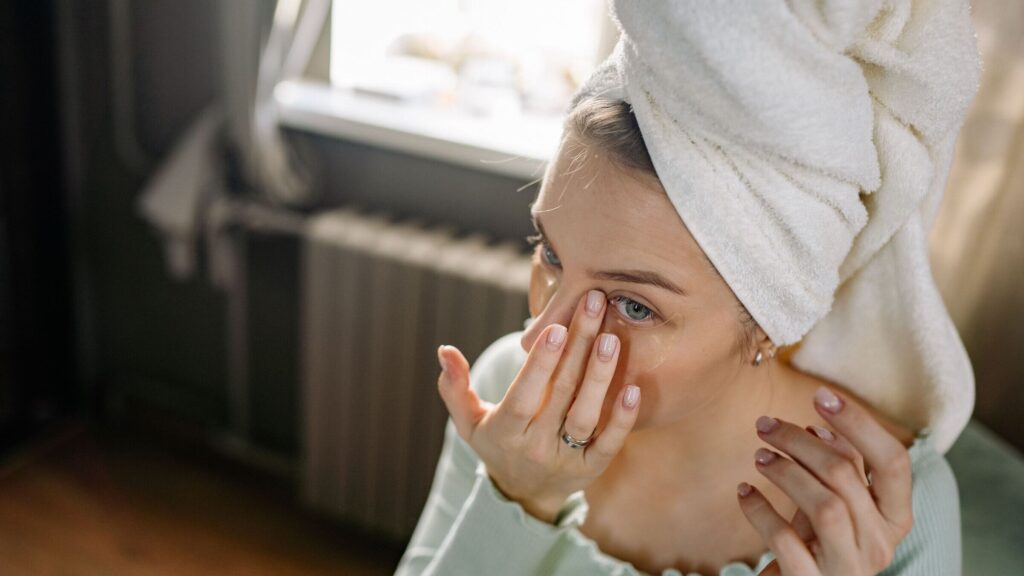
The vasoconstriction mechanism is the most legitimate and well-supported use of topical caffeine. Under-eye skin is thin, and blood vessels sit close to the surface. When caffeine constricts those vessels, it reduces blood pooling, which is what creates the visible dark, puffy appearance many people wake up with.
The catch is duration. This effect is temporary, typically lasting a few hours rather than providing a lasting structural change to the skin. It works well as a same-day, “instant” de-puffing tool, but it is not correcting the underlying cause of under-eye circles, which is usually a combination of genetics, thin skin, and normal blood vessel visibility. Marketing language like “erase dark circles overnight” oversells what is, in reality, a short-term cosmetic effect that needs to be reapplied to maintain.
The Cellulite Myth, Unpacked
This is where caffeine skincare claims get the furthest from the underlying science. Topical caffeine does inhibit phosphodiesterase, an enzyme that plays a role in fat cell metabolism, and this mechanism is real and measurable in lab settings.
However, inhibiting an enzyme in a lab dish is very different from meaningfully reducing fat deposits through a topical cream. The amount of caffeine that actually penetrates to reach fat cells in the dermis is limited, and any visible effect tends to be a temporary tightening or smoothing of the skin’s surface texture rather than an actual reduction in fat volume. If a caffeine body product genuinely made cellulite disappear, dermatology would look very different today.
The honest takeaway: caffeine can offer mild, temporary skin-smoothing, not fat loss.
How to Use Caffeine Skincare Well
Getting real value from caffeine products comes down to realistic expectations and smart pairing.
- Concentration: Most effective eye products use caffeine in the 1–5% range; higher isn’t necessarily better once you’re past this threshold
- Best pairings: Vitamin C and niacinamide both complement caffeine’s antioxidant and anti-inflammatory action well
- Application timing: Since the vasoconstriction effect is temporary, morning application tends to deliver the most noticeable de-puffing benefit for daytime appearance
- Who should be cautious: People with caffeine sensitivity may notice mild irritation; those who are pregnant should discuss topical caffeine absorption with a provider, given limited research on systemic absorption levels
Frequently Asked Questions
Does caffeine skincare actually work?
Yes, for specific uses. The vasoconstriction and antioxidant mechanisms are well-supported by research, particularly for temporary under-eye puffiness reduction. The broader anti-aging and cellulite claims are less supported at the magnitude often marketed.
Can you use caffeine eye cream every day?
Yes, daily use is generally considered safe and is how most people get consistent de-puffing benefit, since the effect is temporary and needs reapplication.
Does a coffee scrub help with cellulite?
Not meaningfully. The mechanical scrubbing action may temporarily smooth skin texture, but there’s no strong evidence that a coffee scrub reduces actual fat deposits or long-term cellulite appearance.
🧪 Lab Verdict
Caffeine is one of the more scientifically legitimate ingredients in the skincare aisle, but the size of the effect matters as much as whether the effect exists at all. Its vasoconstriction and antioxidant properties are genuinely well-documented and make it a reliable, evidence-backed choice for reducing under-eye puffiness. Its cellulite and “sculpting” claims are a different story: the mechanism is real, but the practical impact from a topical product is modest and temporary at best. Use caffeine for what it’s actually good at, quick, short-term de-puffing and antioxidant support, and don’t expect it to replace consistent skincare fundamentals or reshape your body.
References
- Herman, A., & Herman, A. P. (2013). Caffeine’s mechanisms of action and its cosmetic use. Skin Pharmacology and Physiology, 26(1), 8–14. https://pubmed.ncbi.nlm.nih.gov/23075568/
- Brezoiu, A. M., et al. (2020). Caffeine in skincare: its role in skin cancer, sun protection, and cosmetic applications. PMC. https://pmc.ncbi.nlm.nih.gov/articles/PMC10718232/
- Koh, J. S., et al. (2018). Caffeine protects skin from oxidative stress-induced senescence through regulation of antioxidant defense system. PMC. https://pmc.ncbi.nlm.nih.gov/articles/PMC6276298/
- Fonseca, D. F., et al. (2019). Another reason for using caffeine in dermocosmetics. PMC. https://pmc.ncbi.nlm.nih.gov/articles/PMC6509748/
- Cleveland Clinic. (2026). Is caffeine good for your skin? https://health.clevelandclinic.org/benefits-of-caffeine-for-skin-care
- NIVEA. (2021). Caffeine for skin: what are the benefits? https://www.nivea.co.uk/advice/skin/caffeine-for-skin
- Herman, A. P., et al. (2019). Topical caffeine and skin barrier penetration studies. Journal of Cosmetic Dermatology (referenced within PMC review). https://pmc.ncbi.nlm.nih.gov/articles/PMC10718232/
Leave a Reply