
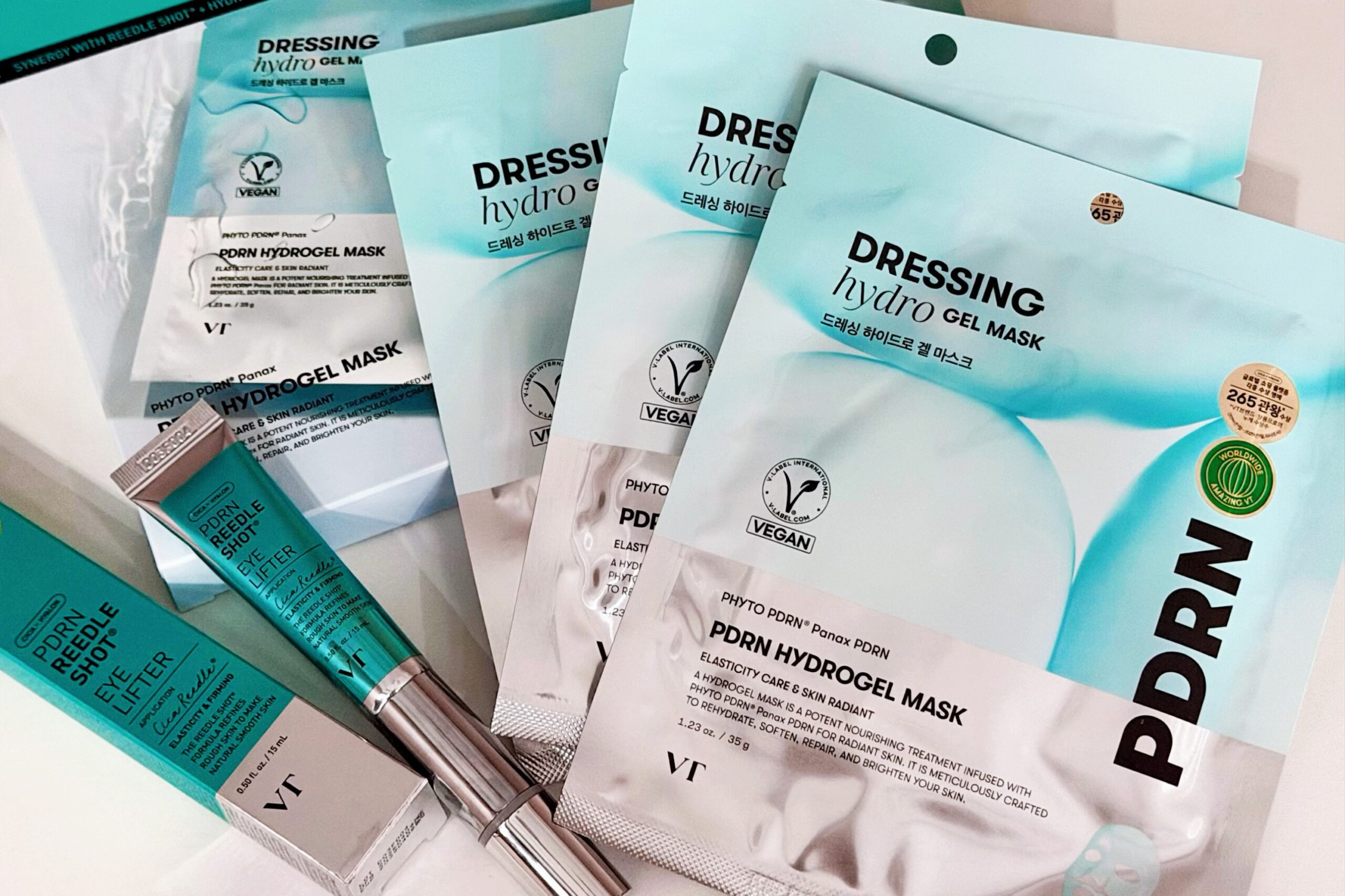
PDRN has been showing up everywhere in K-beauty over the past couple of years, and VT Cosmetics is one of the brands leaning into it the hardest. We already broke down the actual science behind PDRN in our previous post, so this time we wanted to see how that science holds up in two of VT’s most talked-about products: the (vegan) PDRN Hydrogel Mask and the PDRN Reedle Shot Eye Lifter.
I bought both myself to try out, and this is an honest, unpaid review.
A Quick PDRN Refresher
Before getting into the products, let’s revisit what PDRN actually is and where the evidence for it is strongest. PDRN, short for polydeoxyribonucleotide, is a fragment of DNA. It’s traditionally sourced from salmon, though ginseng-derived “phyto” versions have become common as a plant-based alternative. Its best-documented effects come from injectable and medical use. Research shows it supports wound healing and tissue repair in clinical settings.
Topical PDRN tells a different story. PDRN molecules are large, and the skin’s outer layer is built specifically to keep large molecules out. A 2026 study suggests that topical PDRN may help repair and improve aging skin, but larger and longer-term studies are needed to confirm its effectiveness.
Plant-derived PDRN specifically has shown some encouraging results in its own right, though. A 2023 study on Panax PhytoPDRN, the ginseng-derived type VT uses in its vegan mask, found it improved wound re-epithelialization and supported the skin barrier in lab models, and researchers positioned it as a workable alternative to animal-derived PDRN, but human studies are needed to confirm its effectiveness. The ingredient itself isn’t baseless. Going in, it’s more realistic to expect a gentle, gradual effect than a dramatic transformation.
VT Cosmetics Vegan PDRN Hydrogel Mask
What It Claims to Do
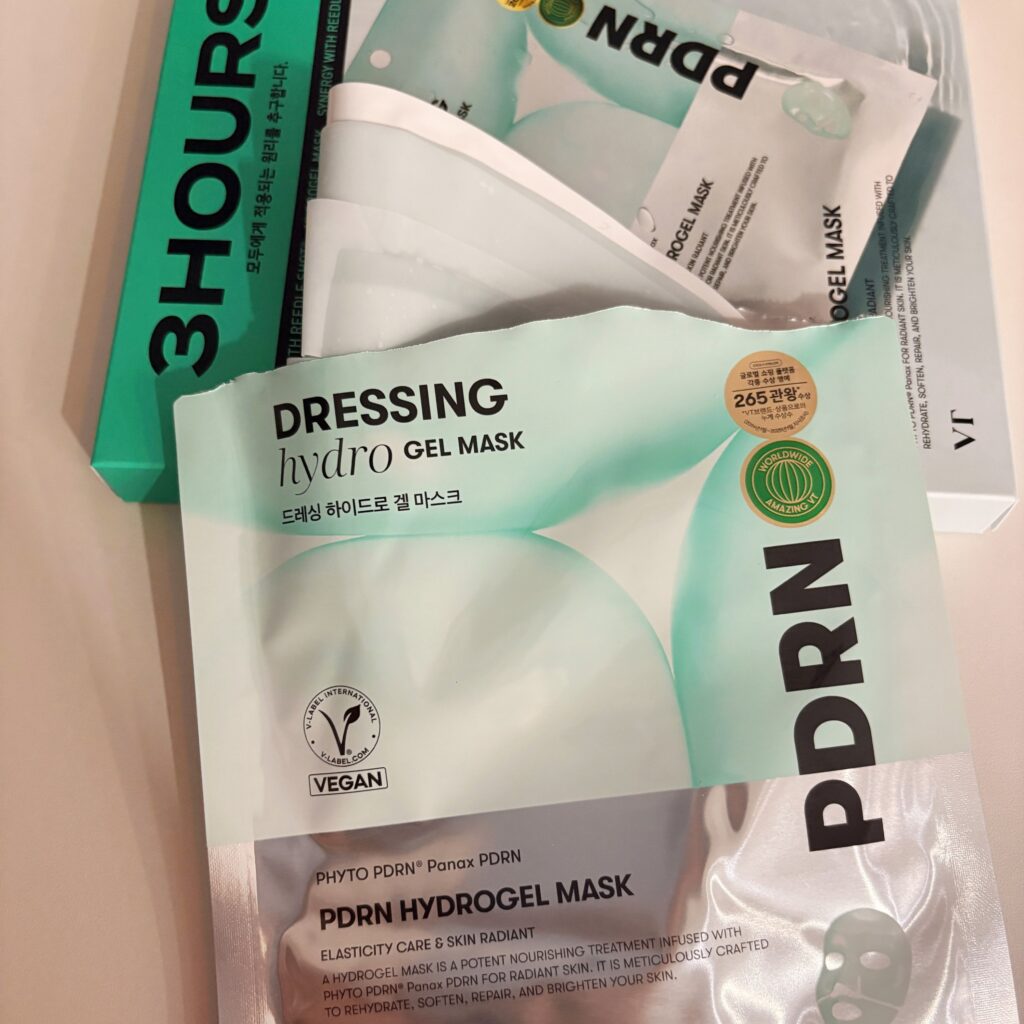
This is a hydrogel sheet mask built around Phyto PDRN sourced from wild ginseng. VT positions it as the vegan alternative to their original, salmon-derived PDRN mask. It’s rounded out with squalane, panthenol, niacinamide, and polyglucuronic acid, and the brand markets it for firmness, elasticity, and general skin barrier support, according to VT’s product page.
The gel sheet itself is built on a base of Chondrus Crispus, a red algae also known as Irish moss. It’s combined with locust bean gum and cellulose gum. This combination is what gives hydrogel masks their thick, jelly-like texture, and it explains a couple of things I noticed while using it.
My Experience & Review
I used this face mask three times, on separate days. Each time, I applied it right after my microcurrent treatment. A few things stood out to me.
First of all, it did feel more absorbed into my skin than the hydrogel mask I’ve tried before from Biodance, another K-beauty brand (I didn’t notice any significant change with that one). The fit, though, wasn’t great. It constantly slipped down my face for close to the first 5-8 minutes before the gel set enough to stay in place. The cutout around my nose didn’t sit well either. Once it dried, I noticed something I wasn’t expecting. The mask felt oily, both while still on my face and after I peeled it off.
So I did some research and found that the oily texture actually tracks with the formula. Alongside the gel base, it’s loaded with emollients like Cetyl Ethylhexanoate, Glyceryl Stearate, shea butter, and squalane. As the water content evaporates or gets absorbed, those oil-like ingredients are what’s left sitting on the surface.
The cooling sensation was real and noticeable throughout, but it never quite crossed over into feeling refreshed. It felt more relaxing than I expected. That matched how I was using it, mostly as a way to unwind after treatment rather than as a routine skincare step.
I also did one small experiment out of curiosity: I dropped a used mask into warm water afterward to see how it would dissolve. And it dissolved back into a jelly. At first that seemed very strange, but then I did more research and it lined up with the ingredients. Chondrus Crispus and Ceratonia Siliqua (Carob) Gum form what’s called a thermoreversible gel. It’s the same thing you’d see in something like a gummy candy or an agar-based dessert. It sets when cool and loosens back up when warmed. So the jelly reaction wasn’t a defect. It was just the base material doing what that type of gel does.
Across all three of my uses, I didn’t experience any redness or discomfort, which is a good thing. However, I also didn’t notice much of a distinct skincare effect beyond hydration and a temporary cooling, relaxing feeling.
What Online Reviewers Say
Other reviews of the mask are fairly consistent with what I experienced. One blog review found the material clingy enough to stay in place well, with a noticeably cooling sensation throughout wear, though the fit around the nose area wasn’t ideal either. Retail reviews on Target average 4.6 out of 5 stars, with people praising the hydration and lack of irritation, though a few mentioned the mask breaking apart easily when handling it.
Conclusion
This isn’t the best face mask I’ve used, but it’s a good, gentle option if you want something cooling and hydrating to use after a treatment or on a slower skincare night. Just don’t expect it to feel weightless once it dries, and go in with realistic expectations about its skincare benefits.
VT Cosmetics PDRN Reedle Shot Eye Lifter
What It Claims to Do
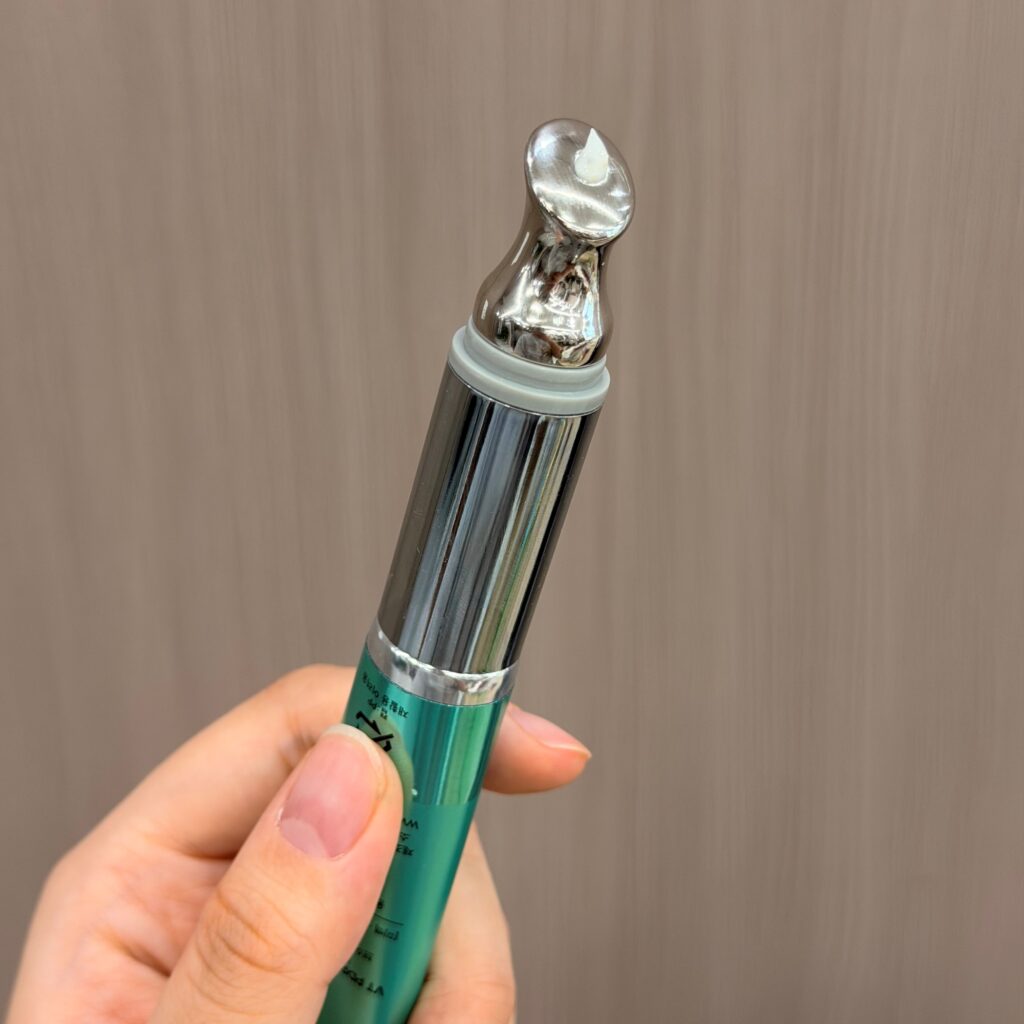
This one pairs a vibrating applicator, delivering up to 12,000 micro-vibrations per minute, with an eye cream. The formula combines two types of PDRN: Phyto PDRN Panax, the same plant-based, ginseng-derived PDRN used in the vegan hydrogel mask, alongside Gold Collagen PDRN, according to its product page. It also contains microneedling spicules. It’s also formulated with niacinamide, ceramides, hyaluronic acid, and tranexamic acid. VT markets it for firmness, fine lines, puffiness, and dark circles, with the vibration applicator positioned as a way to boost absorption and add a lifting effect during application.
My Experience & Review
I tested this eye lifter for one week. The vibrating applicator, honestly, made no noticeable difference. I couldn’t feel any distinct lifting effect from it. What I did notice was that the cream felt better absorbed when I used the applicator, though I’m not sure if this was a psychological effect from the sensation of vibration.
The cream itself was very pleasant to use: no irritation, no tingling, and a texture that didn’t feel heavy under my eyes. I had a few nights where I went to bed late. Normally that shows up the next morning as noticeably darker under-eye circles for me, but with this product in the mix, the darkness seemed a bit lighter than what I’d typically expect on similar days. It also seemed to help with my under-eye puffiness on those mornings.
I can’t speak to firmness or fine lines, since I don’t have visible lines under my eyes yet to judge improvement against.
What Online Reviewers Say
Individual reviews of the eye lifter tend to be positive. One reviewer from Mamamia reported brighter, less puffy under-eyes within a few weeks, even on days with very little sleep. She described the vibration as an aid to absorption rather than a gimmick. VT’s broader “Reedle” product line has a more divided reputation. A widely discussed Reddit thread covered the brand’s Reedle Shot serum, which relies on the same spicule technology in a more concentrated form. The poster described disappointing results after three months of daily use. The replies to that thread were split, with plenty of users pushing back and reporting real improvement. The discussion provided useful context for how mixed experiences with VT’s spicule-based products can be.
Conclusion
Don’t assume the vibrating tip is doing something dramatic on its own. But as an eye cream, this one performed reasonably well for puffiness and mild dark circle improvement over a short testing window, without any irritation.
🧪Lab Verdict
My personal reviews suggest to me that both products line up with what the current research on topical PDRN would predict: modest, gradual results rather than dramatic ones. The hydrogel mask leans more toward a relaxing, hydrating treat than an active treatment. The eye lifter combines more technology than it first appears, spicules, vibration, and two PDRN types, but none of that turned into a noticeable lifting effect during my week of testing. The eye cream did show believable benefit for puffiness and dark circles. Topical PDRN faces reduced skin penetration, so measured improvement is roughly what to expect. Injectable-level results aren’t realistic here.
FAQ
Is VT’s Vegan PDRN Hydrogel Mask actually vegan?
The vegan version specifically uses Phyto PDRN sourced from wild ginseng instead of the salmon-derived PDRN found in VT’s original hydrogel mask. If you’re specifically avoiding animal-derived ingredients, check that the packaging says “vegan.”
Does the vibrating applicator on the Reedle Shot Eye Lifter actually do anything?
Based on my experience, it didn’t produce a noticeable lifting effect on its own. It may help the product feel more absorbed during application. The eye cream itself seemed to be doing most of the actual work.
Should I expect dramatic results from topical PDRN products?
No. Topical PDRN faces penetration limits due to its molecular size, so results tend to be gradual and modest rather than dramatic, closer to what you’d get from a solid hydrating or barrier-supporting product than an injectable treatment.
Leave a Reply