
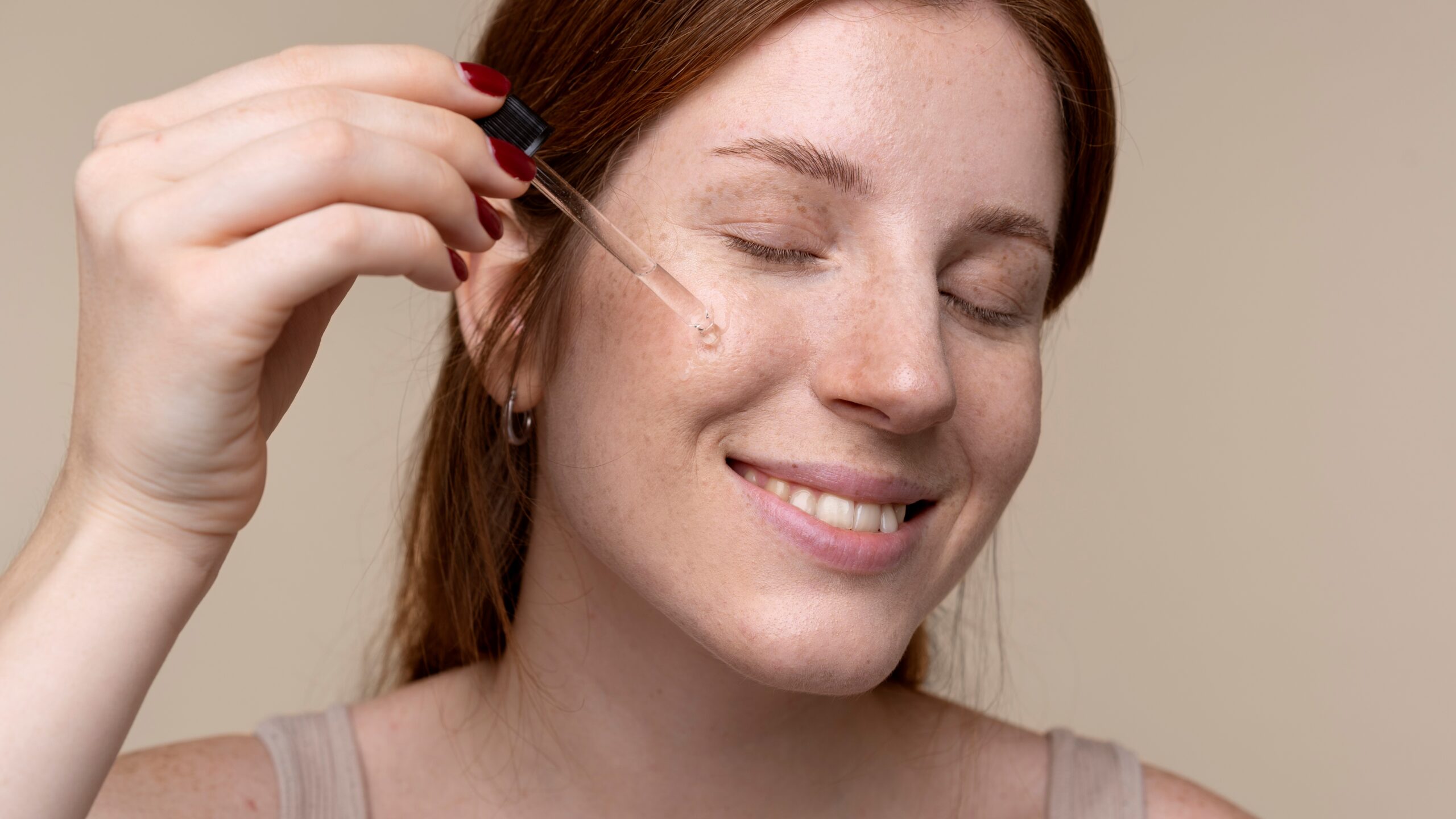
PDRN stands for polydeoxyribonucleotide. Manufacturers extract this DNA fragment most often from salmon or trout. Skincare brands market it as a regenerative ingredient that calms inflammation, supports collagen production, and speeds up skin repair.
Most of the strong evidence behind this reputation comes from injectable treatments. Dermatologists and med spas perform these treatments in-office, not at home. Independent researchers haven’t tested the serums and creams carrying the same name nearly as thoroughly. That gap matters if you’re deciding whether to try it.
What PDRN Is, and the PN Mix-Up Worth Knowing
Skincare marketing often uses PDRN and a related ingredient called PN (polynucleotide) interchangeably. A 2024 review in the International Journal of Molecular Sciences draws a clear line between them. Manufacturers make PDRN from shorter DNA fragments pulled from salmon or trout sperm cells. PN comes from the testes of the same fish, carries longer DNA chains, and forms a structural scaffold that PDRN lacks.
Here’s why this matters: Rejuran, the injectable product most associated with the “PDRN trend” in Korean skincare, actually relies on PN, not PDRN. The beauty industry tends to use “PDRN” as a catch-all term for both. A product labeled PDRN could technically contain either compound. If you want to know exactly what you’re using, check the ingredient list for the specific term. That extra minute of label-reading can save you from buying the wrong thing entirely.
How It Works
Both PDRN and PN attach to a receptor on skin cells. Think of that receptor as a switch for tissue repair. Once it flips, cells receive a signal to:
- Calm inflammation
- Ramp up collagen production
- Speed along the skin’s natural healing process
That’s the theory behind why brands market PDRN as a repair-focused ingredient rather than a purely cosmetic one. It’s also the same basic mechanism whether a provider injects the product or you apply it topically. What changes between those two delivery methods is how much of the ingredient actually reaches the cells that respond to it. That question drives the rest of this article.
Where PDRN and PN Come From
Manufacturers extract both ingredients from fish DNA, usually salmon or trout, then purify it into short, stable fragments. Animal-derived sourcing doesn’t fit every brand’s formulation goals, so some companies now offer fermentation-derived versions they call “vegan PDRN.” These alternatives aim to mimic the same DNA fragment structure without using fish byproducts. Researchers haven’t yet run much independent testing comparing the two sourcing methods head-to-head, so treat vegan-PDRN claims of equal effectiveness with the same caution you’d apply to any new ingredient variant.
What the Injectable Evidence Shows
The clearest data on this ingredient comes from clinical studies on injectable PN. Providers typically deliver it through a series of small injections just under the skin’s surface, a treatment some clinics call a “skin booster.”
- A study on Korean women who received four PN injections, spaced two weeks apart, found measurable improvements in pore size, skin thickness, tone, and mild sagging. Researchers reported no serious side effects.
- A 72-person trial found that PN injections outperformed a filler made from non-cross-linked hyaluronic acid on skin elasticity, collagen levels, surface roughness, and wrinkle depth. A follow-up study found similar results.
- A trial compared Rejuran against a hyaluronic acid filler for crow’s feet. The Rejuran group gained more elasticity and collagen, and the effects lasted up to 12 months.
Most protocols call for three to four visits, spaced a few weeks apart, and results build gradually rather than appearing after a single treatment. Across these studies, most people experienced only mild, short-lived side effects like temporary redness, swelling, or bruising at the injection site.
Topical PDRN: Serum vs. Injection
Skin carries a tough outer barrier that keeps large molecules out by design. DNA fragments like PDRN and PN count as large molecules. An injection places the ingredient directly where it needs to act, underneath that barrier entirely. A serum has to fight through the barrier first, and that’s a much harder path.
Independent researchers still haven’t confirmed how much of a topical PDRN formula actually reaches living skin cells in meaningful amounts. Cosmetic chemists and dermatologists who’ve reviewed this gap tend to describe topical PDRN as promising in theory, but unproven at the level the injectable studies demonstrate.
That doesn’t mean a topical PDRN serum does nothing. A few things worth keeping in mind:
- Even a small amount reaching the surface layers of skin could support hydration and calm visible redness, a benefit several PDRN serum reviews mention anecdotally
- A serum works more like a gentler, slower-acting cousin of what a skin booster injection delivers
- No topical product currently replaces the needle when it comes to matching the injectable results above
Who Might Benefit From Trying It
If dullness, mild dehydration, or occasional redness top your list of concerns, a topical PDRN serum makes a reasonable addition to an existing barrier-support routine. If you’re chasing visible wrinkle reduction, improved elasticity, or the skin-quality changes the clinical studies above documented, a topical product alone probably won’t get you there. Reaching that level of change, based on current research, still means booking an in-office injectable treatment with a trained provider.
Setting Your Expectations
- Professionals achieved the collagen, elasticity, and wrinkle-depth improvements in the clinical studies above through injectable treatments, not topical products
- Treat a topical PDRN serum as a complementary step alongside proven barrier ingredients like ceramides and panthenol, not a stand-in for them
- Watch for claims that lean heavily on injectable study data to sell a topical product — that stretches the evidence further than current research supports
🧪Lab Verdict
PDRN earns its reputation, just not always for the product it’s attached to. Actual clinical studies with before-and-after measurements back the injectable evidence for skin-quality improvement, and that evidence holds up reasonably well. The topical version riding on that reputation carries a much thinner research base. Skin’s protective barrier makes it hard for a large DNA fragment to get through, and researchers haven’t solved that problem with the same rigor they’ve applied to the injectable route. If you’re chasing the results from the clinical studies, book an in-office treatment rather than reaching for a serum. If you’re adding a topical PDRN product to your routine anyway, it won’t hurt as a supporting ingredient.
FAQ
Does topical PDRN serum work?
The evidence is much thinner than for injectable versions. Skin’s barrier makes it hard for large molecules like PDRN to penetrate deeply, so a topical serum likely delivers a smaller, gentler effect than what clinical injection studies have shown.
How is PDRN typically used in skincare treatments?
Providers most often use it as an injectable skin booster, delivering it across a series of sessions spaced several weeks apart, frequently under brand names like Rejuran.
Are there side effects from PDRN treatments?
Injectable studies report mostly mild, short-lived side effects like redness, swelling, or bruising at the injection site. Researchers haven’t studied topical products as extensively for side effects, though most consider them low-risk.
References
- Archives of Plastic Surgery. (2024). Injectable “Skin Boosters” in Aging Skin Rejuvenation: A Current Overview.
- Journal of Korean Medical Science. (2014). A Phase III, Randomized, Double-Blind, Matched-Pairs Study Comparing PN Gel and Hyaluronic Acid Filler.
- Pharmaceutics. (2025). Comparison of Polynucleotide and Polydeoxyribonucleotide in Dermatology: Molecular Mechanisms and Clinical Perspectives.
- Chemist Confessions. (2025). PDRN Skincare: Hype vs. Reality.
Leave a Reply