
Arsenic is natural. So is poison ivy. So is the compound in poison oak that causes blistering rashes on contact. Meanwhile, hyaluronic acid — one of the most beloved ingredients in modern skincare — is frequently made in a laboratory, and your skin cannot tell the difference between that version and the one it produces itself.
The beauty industry has spent over a decade building a story in which “natural” signals purity and safety, and “synthetic” signals risk. It’s a compelling narrative. It’s also a logical fallacy, and one that shapes billions of dollars in purchasing decisions every year. We break down why ingredient origin is the wrong question, what the evidence actually shows, and how to think about this the way a cosmetic chemist would.
Where the “Natural = Safe” Idea Came From
The global clean beauty market was valued at approximately $10.79 billion in 2025 and is projected to nearly triple by 2034. That growth has been driven largely by fear — the fear that conventional cosmetic ingredients are quietly harmful, and that switching to “natural” or “clean” products removes that risk.
The movement has legitimate roots: some older cosmetic formulations did contain ingredients that were later restricted for good reasons. But somewhere along the way, that reasonable caution became a marketing binary.
Here is the problem: “clean beauty” has no regulated definition in any major market. Every brand that uses the term defines it however suits them. A product labeled “clean” can contain fragrance allergens, phototoxic plant extracts, and poorly preserved formulations — all while positioning itself as the safer choice.
The Logic Problem
Treating natural origin as proof of safety is a well-known logical error called the appeal to nature fallacy.
The reasoning goes: if something comes from nature, it must be good; if it was made in a lab, it must carry risk. But nature is entirely indifferent to human health. It doesn’t calibrate plant compounds for our benefit or distinguish between what helps us and what harms us.
The 16th-century physician Paracelsus put it plainly in a principle that still anchors modern toxicology: “The dose makes the poison.” The relevant question is never where did this come from? It is always at what concentration, and in what context?
When “Natural” Is the Danger
Essential oils and contact allergies
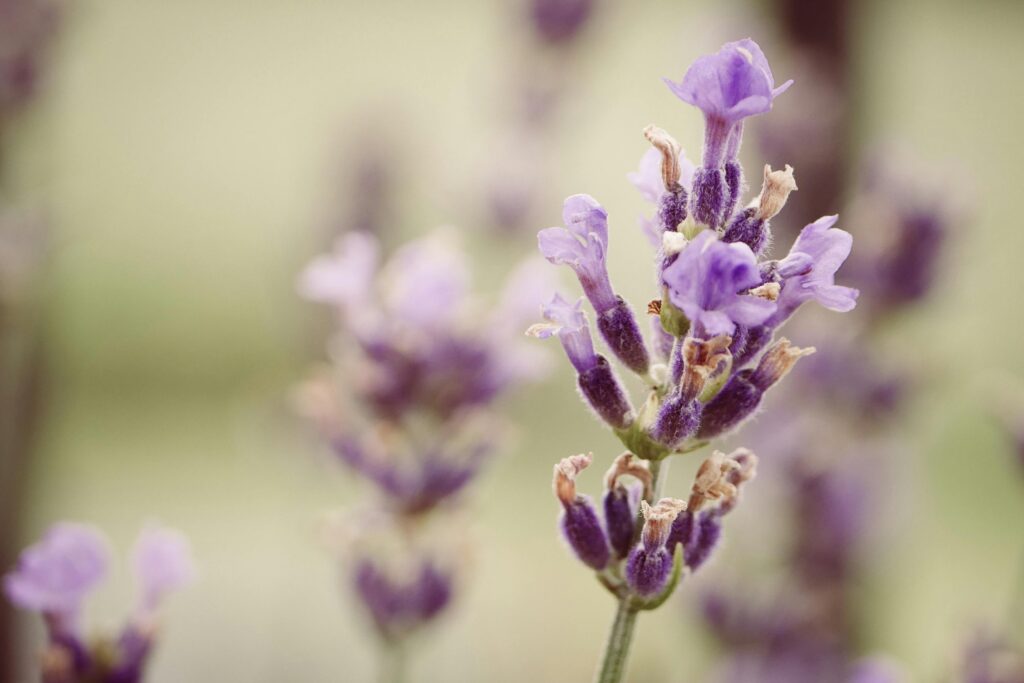
Essential oils are staples of natural skincare, and they are also consistently among the top causes of allergic skin reactions in cosmetic users.
The allergens aren’t exotic synthetic chemicals. They’re compounds found in lavender, lemon, orange, and other familiar plants — specifically, linalool (in lavender and bergamot) and limonene (in most citrus). When these compounds oxidize in air, they become potent sensitizers that can trigger contact allergies.
A 2022 study in Contact Dermatitis tested over 5,700 patients and found contact allergy rates of 7.0% for oxidized linalool and 5.1% for oxidized limonene, with rates rising year over year. A separate study found that nearly 12% of patients tested positive for linalool-derived allergens. These are not rare reactions, they’re among the most commonly identified cosmetic allergens today, found in thousands of “natural” products.
Citrus oils and sun damage
Several popular plant oils, including bergamot, cold-pressed lemon, lime, and bitter orange, contain compounds called furanocoumarins that react with UV light. Apply them to your skin, then go outside, and you risk chemical burns, blistering, and lasting dark spots. This isn’t a rare misuse scenario. It happens regularly to people using “natural” facial oils and DIY recipes that include these ingredients with no warning.
The lavender and tea tree question
Lavender and tea tree oil carry a more nuanced concern. Research found that several of their chemical components may interfere with hormone activity in laboratory conditions. A systematic review later found that the clinical evidence was limited and didn’t establish a clear causal link in humans. The jury is still out. But the point stands: “natural” does not exempt an ingredient from scrutiny.
When “Synthetic” Is the Safer Choice
Parabens: the most unfairly maligned preservative
Parabens are among the most studied preservative ingredients in existence. And they’ve been the subject of a sustained fear campaign that reshaped the market, without evidence that it improved consumer safety.
The Cosmetic Ingredient Review (CIR) Expert Panel assessed 21 parabens in 2020 and concluded that 20 are safe at current cosmetic concentrations. The EU’s independent Scientific Committee on Consumer Safety reached the same conclusion, noting that any estrogenic activity observed in lab studies is thousands to millions of times weaker than natural estrogens.
What happened when “paraben-free” became a selling point? Many brands replaced parabens with less well-studied preservatives, including some with higher allergy rates, or turned to rosemary extract and vitamin E as “natural” alternatives. The problem: those are antioxidants, not antimicrobials. They don’t prevent bacterial growth in water-based formulas, meaning some “natural” products are simply less safe to use.
Silicones: inert, misunderstood, and unfairly banned
Silicones — ingredients like dimethicone and cyclopentasiloxane — are synthetic polymers derived from silica (sand). They are chemically inert, meaning they don’t react with your skin, other ingredients, or the environment. They improve texture, protect the skin surface, and are among the least allergenic ingredients in cosmetics.
The “silicones clog pores” claim doesn’t hold up to scrutiny. Dimethicone scores 0–1 on the standard comedogenicity (pore-clogging) scale of 0–5. For comparison, coconut oil — a clean beauty staple — scores a 4. The FDA lists dimethicone as an approved skin protectant. Skin receives its oxygen through the bloodstream, not through the surface, so the “silicones suffocate skin” claim has no biological mechanism to stand on.
Synthetic vitamin C derivatives
Pure vitamin C (L-ascorbic acid) is unstable. It oxidizes quickly, turning serums yellow and losing potency. Synthetic derivatives like sodium ascorbyl phosphate and ascorbyl glucoside were developed to solve this: they’re stable in formulas, convert to active vitamin C once absorbed, and are often better tolerated by sensitive skin. The molecule your skin ultimately uses is the same. Only the delivery is different.
| Ingredient | Origin | What People Think | What the Evidence Shows |
|---|---|---|---|
| Oxidized linalool (lavender) | Natural | Safe, calming | 7% contact allergy rate in clinical patch tests |
| Cold-pressed bergamot oil | Natural | Brightening, luxurious | Causes chemical burns under UV exposure |
| Coconut oil | Natural | Moisturizing, “clean” | Comedogenicity score of 4 out of 5 |
| Parabens | Synthetic | Hormone-disrupting | Confirmed safe by EU SCCS and CIR; estrogenic activity thousands× weaker than natural estrogens |
| Dimethicone (silicone) | Synthetic | Clogs pores, suffocates skin | Comedogenicity score of 0–1; FDA-approved skin protectant |
| Sodium ascorbyl phosphate | Synthetic | “Fake” vitamin C | Converts to active vitamin C in skin; more stable than the natural form |
The Dose Makes the Poison
The dose principle from Paracelsus isn’t a technicality. It’s the foundation of how every credible regulatory body evaluates cosmetic ingredient safety. The EU Cosmetics Regulation and FDA cosmetic guidelines both assess ingredients based on concentration, exposure route, and dose-response data, not on whether the ingredient came from a plant.
This doesn’t mean all synthetics are safe or all naturals are dangerous. It means neither origin category gives an ingredient a free pass, or an automatic strike against it. Safety belongs to the specific compound, at the specific concentration, in the specific formula.
A Better Way to Evaluate Any Ingredient
Next time you flip over a product, skip the question “is this natural?” and try these instead:
- What does it do? Is it a preservative, an active, an emollient? Knowing its function sets realistic expectations.
- How much of it is there? If it appears after phenoxyethanol in the ingredient list, it’s below 1% — likely too small to be functionally significant (see previous Blog).
- What does the research say? Check INCIDecoder, the EU CosIng database, or PubMed, not brand websites. Look for peer-reviewed data, not theoretical hazard scores.
- Does it have a documented reaction history? Some ingredients, certain fragrance compounds, citrus oils, strong sensitizers, have clear clinical track records worth knowing about.
This framework applies equally to natural and synthetic ingredients, which is the whole point.
🧪 Lab Verdict
“Natural” is a marketing category. “Safe” is a scientific one. Oxidized linalool (from lavender), one of the most beloved natural ingredients, has a 7% clinical allergy rate in patch-tested patients. Parabens, one of the most feared synthetics, are confirmed safe at cosmetic concentrations by both the EU’s independent scientific committee and the CIR Expert Panel, with estrogenic activity thousands of times weaker than natural estrogens. Your skin responds to molecules, not marketing labels. Evaluate accordingly.
References
- Christensson JB, et al. “Contact allergy to oxidized linalool and oxidized limonene: Patch testing in consecutive patients with dermatitis.” Contact Dermatitis. 2022;86(1):15–24. doi:10.1111/cod.13980
- Dittmar D, Schuttelaar MLA. “Contact sensitization to hydroperoxides of limonene and linalool.” Contact Dermatitis. 2019;80(2):101–109. PMC6587870
- Cherian P, et al. “Amended Safety Assessment of Parabens as Used in Cosmetics.” International Journal of Toxicology. 2020;39(Suppl 1):5S–97S. doi:10.1177/1091581820925001
- European Commission SCCS. “Parabens Used in Cosmetics — Citizens’ Summary.” https://ec.europa.eu/health/scientific_committees/docs/citizens_parabens_en.pdf
- Halvorsen JA, et al. “A perspective on the safety of parabens as preservatives in wound care.” International Wound Journal. 2021;18(4):394–402. PMC8243994
- Pulkka A, et al. “New Insights Concerning Phytophotodermatitis Induced by Phototoxic Plants.” Life (Basel). 2024;14(8):1019. PMC11355232
- Ramsey JT, et al. “Chemicals in lavender and tea tree oil appear to be hormone disruptors.” Endocrine Society Annual Meeting 2018. Science Daily. March 2018.
- Lam J, et al. “The relationship between lavender and tea tree essential oils and pediatric endocrine disorders: A systematic review.” Complementary Therapies in Medicine. 2020;49:102288. doi:10.1016/j.ctim.2019.102288
- Wikipedia. “The Dose Makes the Poison.” Citing Paracelsus. https://en.wikipedia.org/wiki/The_dose_makes_the_poison
- Fortune Business Insights. “Clean Beauty Market Size, Share & Industry Analysis.” 2025. https://www.fortunebusinessinsights.com/clean-beauty-market-111332
- Nature. “Analyzing the landscape of ‘clean’ products.” Journal of Exposure Science & Environmental Epidemiology. 2026. doi:10.1038/s41370-026-00867-6
- Hemsworth Homestead. “The Truth About Natural Preservatives: Why Vitamin E and Rosemary Extract Aren’t Enough.” February 2025. https://hemsworthhomestead.com/blogs/news/the-truth-about-natural-preservatives-why-vitamin-e-and-rosemary-extract-aren-t-enough
- Southern Marin Dermatology. “The Truth About Silicone.” March 2021. https://southernmarinderm.com/the-truth-about-silicone/
- Basic Maintenance. “Are Silicones Comedogenic? Clinical Evidence.” February 2026. https://basic-maintenance.com/blogs/afq/are-silicones-comedogenic-dimethicone-cyclopentasiloxane-acne-evidence
Leave a Reply